
ABOUT AFINGEN® · NARRATIVE 01
Growing the Future of Agriculture
The United Nations projected in 2024 that the global population would reach approximately 9.6 billion by 2050, highlighting growing demand for food, feed, fiber, and other agricultural products. Meeting this demand calls for advances in agricultural productivity, crop resilience, and resource-use efficiency.
AFINGEN® develops plant biotechnology for crop-specific trait improvement, supported by precision genetic engineering, industry partnerships, and technology licensing.
NARRATIVE 02
Scientific Origins & Technology
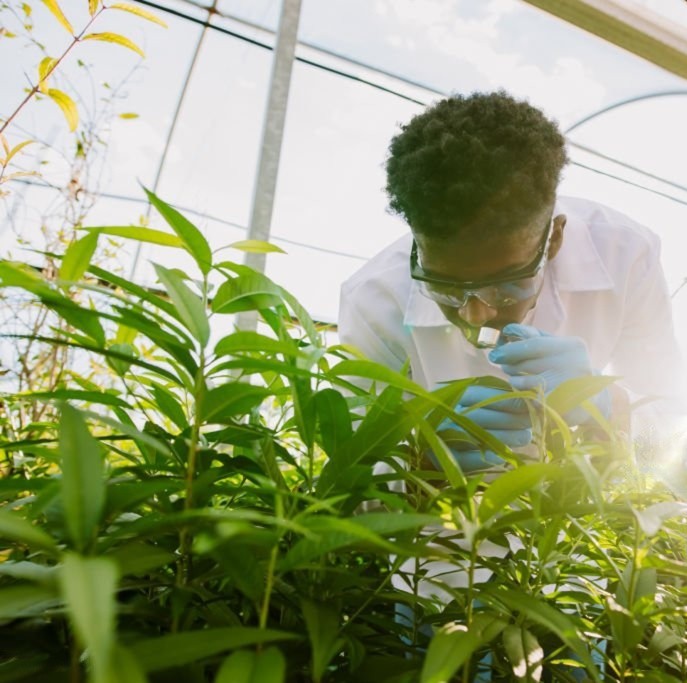
AFINGEN® traces its origins to plant biotechnology research at Lawrence Berkeley National Laboratory (Berkeley Lab) and the Joint BioEnergy Institute (JBEI), where the foundational concept of AFINGEN® Positive Feedback Loop (APFL) technology was developed. AFINGEN, Inc. was established to advance commercial applications of this technology, using precision gene regulation to develop agriculturally valuable plant traits.
Following AFINGEN, Inc., Astalake Biosystems, Inc. became the corporate home of the technology. Today, AFINGEN® is a registered plant biotechnology brand of Astalake Biosystems, Inc. The company’s broader biotechnology portfolio encompasses research and development supported by U.S. SBIR/STTR programs through the Department of Energy (DOE), NASA, and USDA-NIFA, together with collaborations involving researchers at the University of California, Berkeley (UC Berkeley) and the University of California, Davis (UC Davis).
NARRATIVE 03
Precision Crop Improvement
AFINGEN®’s proprietary APFL technology uses tissue-targeted gene regulation to investigate and develop agriculturally valuable plant traits. Research involving AFINGEN® biotechnology has examined:
Growth & biomass
Approaches to improving vegetative development and biomass accumulation.
Seed & grain production
Genetic strategies targeting seed production and yield-related characteristics.
Root development
Plant traits relevant to root growth and agricultural productivity.
Biomass quality
Tissue-specific regulation of lignin and cell-wall characteristics relevant to forage quality, digestibility, and biomass processing.
AGRICULTURAL APPLICATIONS
Advancing Agricultural Biotechnology Applications
AFINGEN® advances its plant biotechnology research toward commercially relevant crop improvement technologies.
Its development strategy focuses on precision genetic engineering, crop-specific trait optimization, and the evaluation of agricultural applications that can contribute to productivity, quality, and resource-use efficiency.
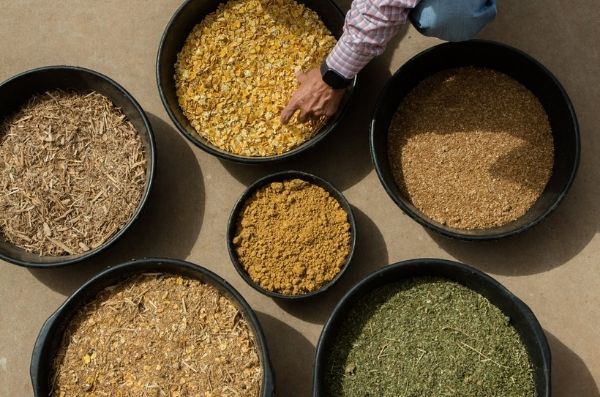
Within the broader ASTALAKE BIOSYSTEMS® portfolio, AFINGEN® technologies provide a foundation for exploring applications in animal-feed biotechnology, agricultural resilience, and environmentally sustainable biological production.
These complementary research directions connect with CLIMATE BIO®, which focuses on agricultural biotechnology applications relevant to livestock methane, forage characteristics, and climate-related agricultural challenges.
NARRATIVE 04
Commercial Development & Partnerships
AFINGEN® pursues commercial development through crop-specific technology evaluation, collaborative research and development, strategic industry partnerships, and technology licensing.
AFINGEN® welcomes collaboration with seed companies, crop developers, agricultural biotechnology businesses, and organizations seeking innovative plant-trait technologies.
Building on its research heritage, intellectual property portfolio, and precision genetic engineering capabilities, AFINGEN® aims to advance the development of productive, resilient, and resource-efficient agricultural systems.
Explore our technologies.
AFINGEN® APFL Platform | CLIMATE BIO®
Partner with AFINGEN®.
We welcome discussions with agricultural biotechnology partners, crop developers, seed companies, and prospective licensees interested in evaluating and advancing AFINGEN® technologies.
LEADERSHIP
Management Team

Ai Oikawa, Ph.D.
CEO/CSO
CEO/CSO of AFINGEN®, where she leads development of plant biotechnology platforms for food, feed, fiber, and phytochemical applications. Her work has received SBIR support from the U.S. Department of Energy, USDA, and NASA. Dr. Oikawa earned a Ph.D. in Agricultural Bioprocess Engineering and held research appointments at Yale University, UC Berkeley, and Lawrence Berkeley National Laboratory.

Carolyn Fritz, M.B.A

Kenneth Davenport, Ph.D.
ADVISORS
Guidance from Industry & Innovation Leaders
Keith Newhouse, Ph.D.
Bill Shelander, M.B.A.
Co-Director of the Cleantech to Market program at the UC Berkeley Haas School of Business and previously Business Development Expert at Lawrence Berkeley National Laboratory, with 20+ years of venture-capital experience.
CREDIBILITY & SUPPORT
Research Collaborations & Federal Support

UNITED STATES DEPARTMENT OF AGRICULTURE NIFA

NATIONAL AERONAUTICS AND SPACE ADMINISTRATION SBIR/STTR

DOE OFFICE OF SCIENCE, BIOLOGICAL AND ENVIRONMENTAL RESEARCH

LAWRENCE BERKELEY NATIONAL LABORATORY

ABPDU

UNIVERSITY OF CALIFORNIA DIVISION OF AGRICULTURE AND NATURAL RESOURCES

UC DAVIS
